Timeline
Jan 2021 - Mar 2022
Role
Product Designer
Team




Industry
Social Good
Type
Mobile App
The Problem
GoodHood had launched as a neighbourhood-based social platform. Early adoption was promising. Retention was not.
Users signed up, explored briefly, and left. Without a strong utility hook or a clear daily reason to return, the social feed was not generating the habits the platform needed to grow. Pure social posting in a hyperlocal context faces a structural challenge that broader social platforms do not: the content pool is tiny. A neighbourhood is not the internet. If your three nearest neighbours are not posting today, your feed is empty.
The question the team was wrestling with was not about visual design. It was about what GoodHood was actually for, and why a user would open it tomorrow.
My Role
As the sole designer on a team of four, I owned the entire design process end to end — user research, product strategy input, information architecture, UX design, UI design, prototyping, and testing. There was no design system to inherit, no previous designer's work to build on, and no design director above me. Just the founder, two engineers, and a product that needed rethinking.
Coming from graphic design, I had strong visual instincts but had to build the research and strategic muscle quickly. GoodHood was where that happened.
Research and the Pivot
Through user surveys, interviews, and analysis of platform behaviour data, one finding kept surfacing. Neighbours wanted to help and connect — the mission resonated — but they did not have clear starting points. Pure social posting felt passive. People were not sure what to post, and they were not sure why it mattered if they did.
Utility-driven actions told a different story. Giving away an item, borrowing a tool, asking for help with something specific — these had a clear beginning and end. They created a tangible exchange. They gave users a concrete reason to open the app.
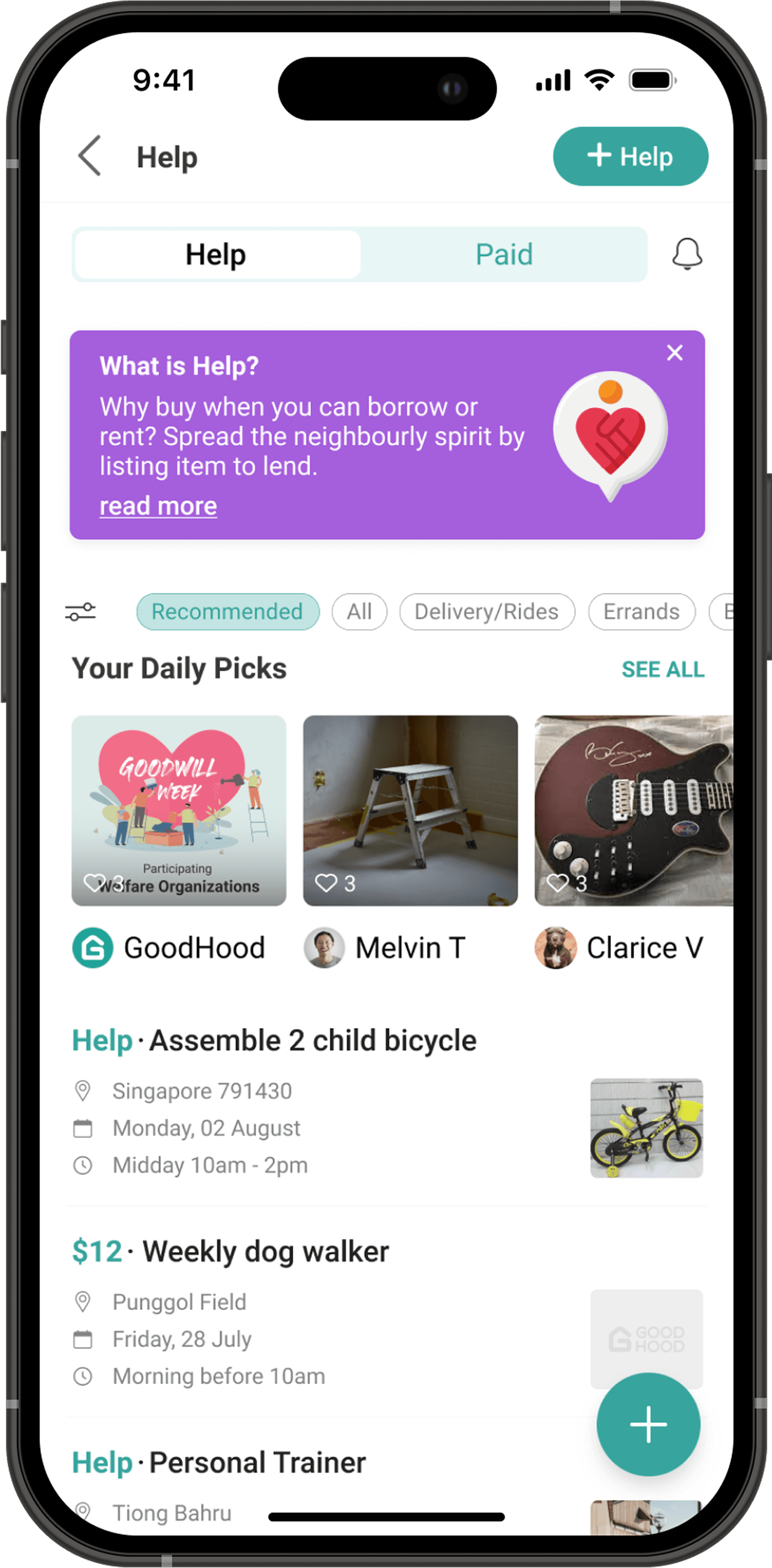
The insight led to a product pivot: away from a social-first feed and toward a utility-first platform structured around three core actions — Give, Help, and Lend. Each category created immediate, legible value. Users could see exactly how they could contribute and exactly what they might receive.
The Design
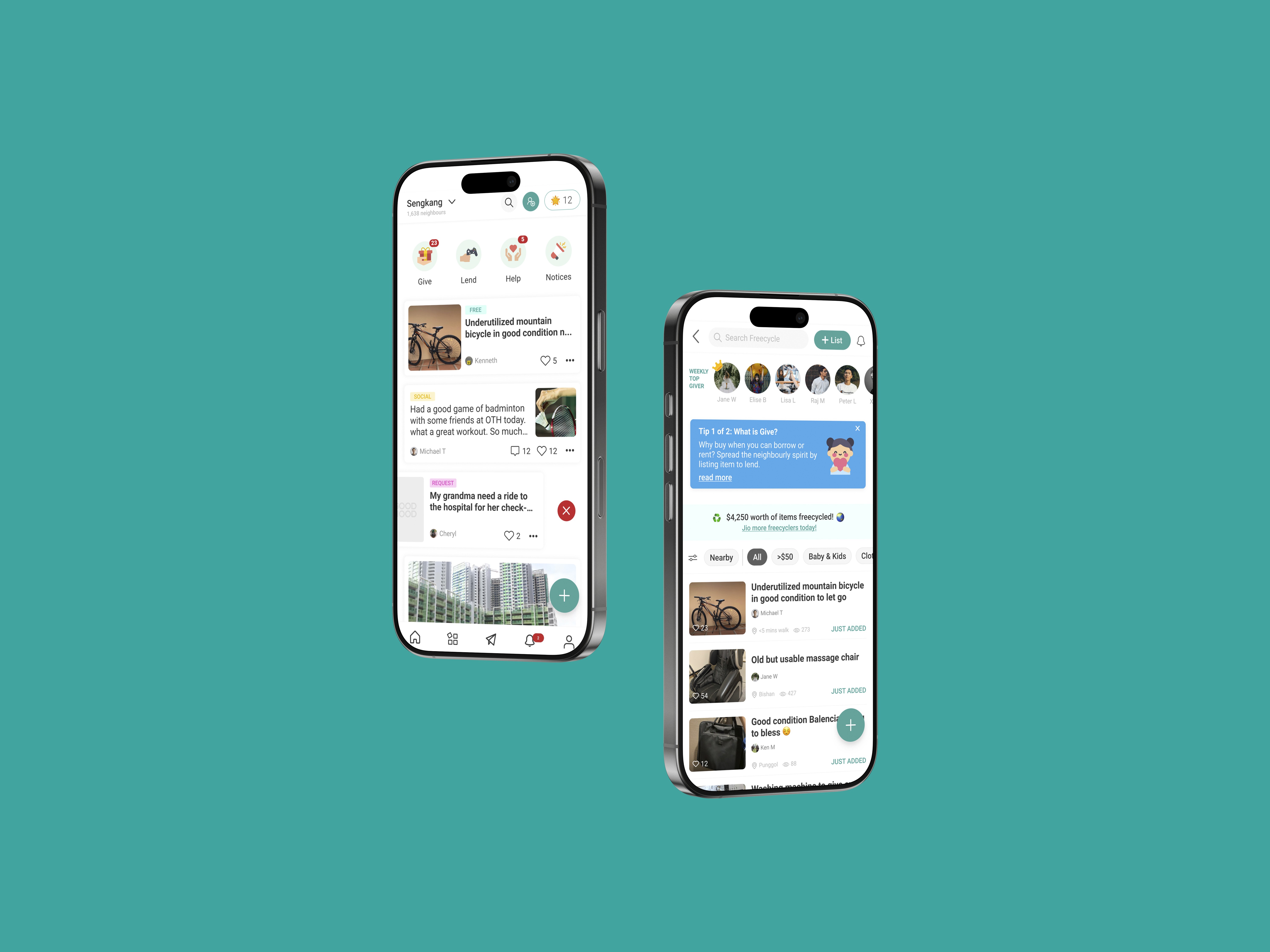
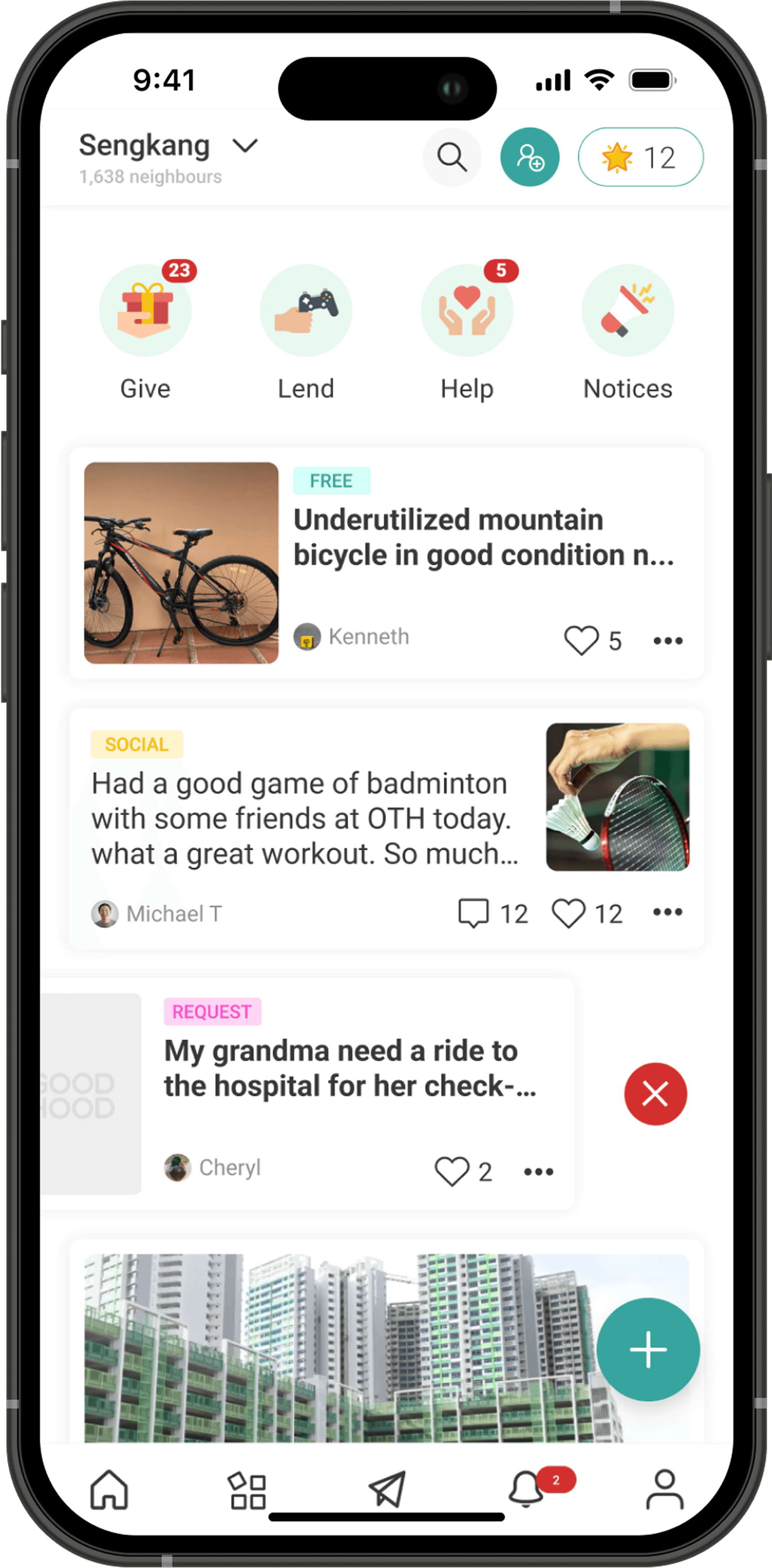
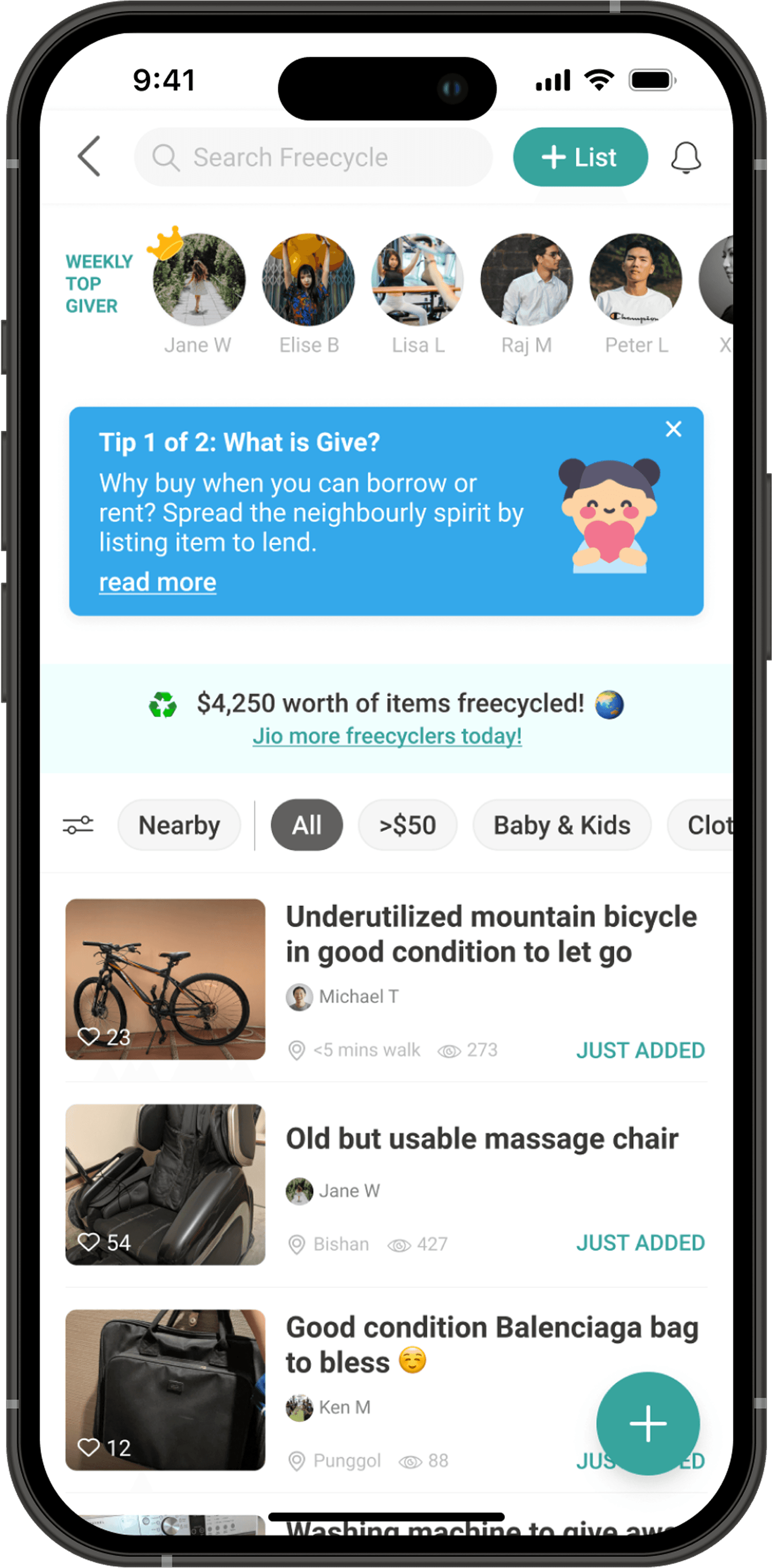
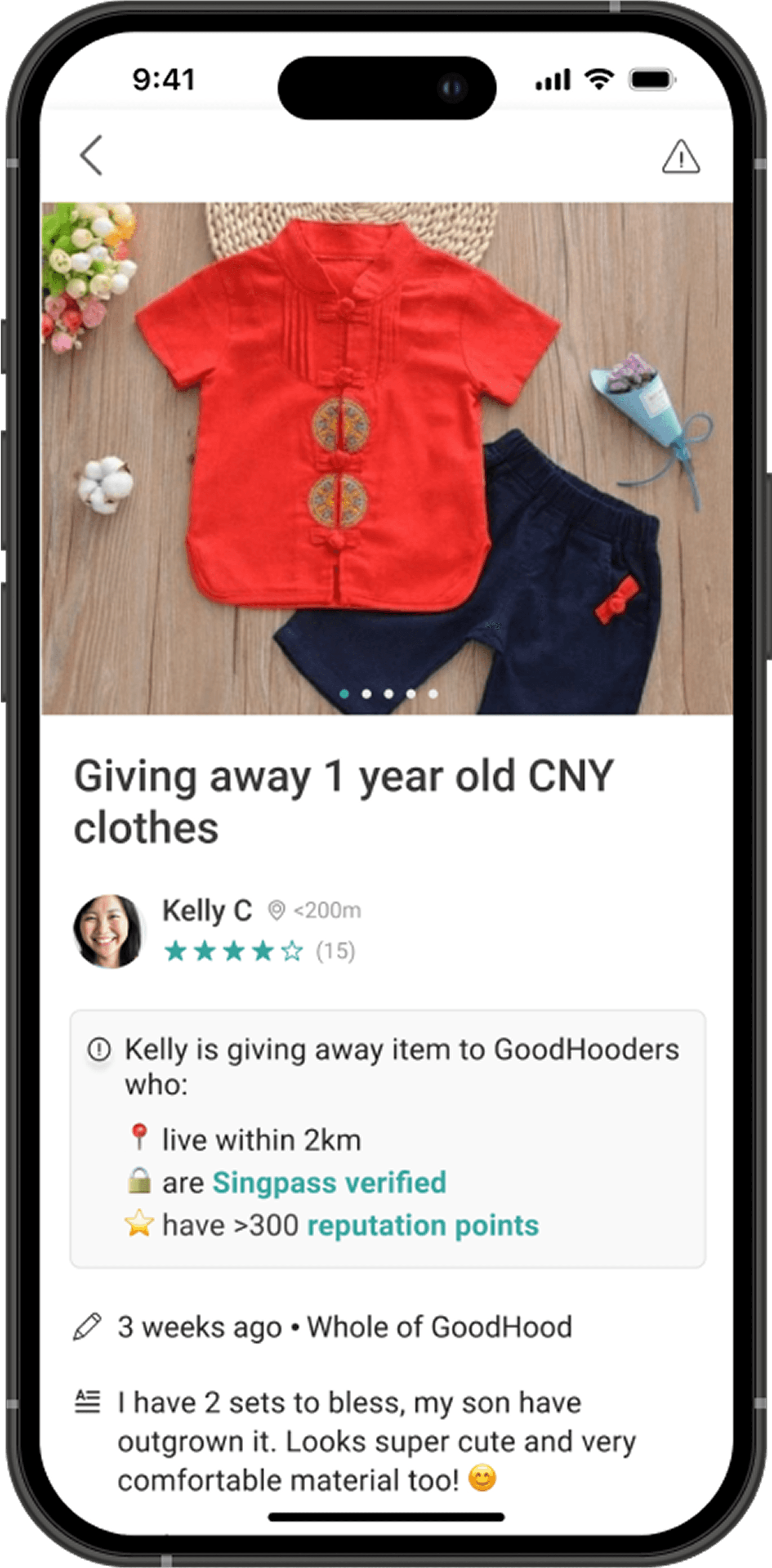
Starting from the founder's original screens, I rebuilt the experience from the ground up. The home feed shifted from generic social posts to action-driven listings organised by Give, Help, and Lend. The posting flow was simplified significantly — creating a listing had too many steps in the original experience, and reducing that friction was essential for the utility model to work. Nearby opportunities were surfaced more prominently, because hyperlocal relevance is the product's entire value proposition.
The visual language was refreshed to match the new direction. The original design had the qualities of something built by someone learning as they went — inconsistent spacing, mixed typographic scales, unclear hierarchy. The redesign introduced a standardised component system, a lighter and friendlier visual tone using community-driven illustrations and a softer palette, and consistent interaction patterns across the platform. The goal was for the app to feel like a neighbourhood: approachable, human, and easy to navigate.
One design decision worth calling out specifically: within the Give feature, I introduced a light gamification system — badges and small rewards for listing items and completing successful giveaways. This was not a core UX principle but a deliberate behavioural nudge for one of the hardest actions to prompt: giving something away for free. It worked. Post creation rates in the Give category responded more strongly than the others.
The Outcome
Post creation rates increased by 30% following the pivot. Users reported higher satisfaction with the clarity of what they could do on the platform. The Give gamification drove measurable increases in item listings.
And overall retention continued to fall below targets.
That is the honest result, and it is worth saying clearly. The utility pivot improved specific behaviours meaningfully. It did not solve the underlying retention problem. Building lasting daily habits in a hyperlocal app requires more than better UX — it requires community density, which is a distribution and market problem, not a design problem. Without enough neighbours in a given area using the platform simultaneously, the experience could be as well-designed as possible and still feel empty.
This was the most important thing GoodHood taught me. Design can create the conditions for a product to work. It cannot manufacture the network effects that make it indispensable.
What This Project Changed About How I Work
GoodHood shaped my design practice in ways that have stayed with me across every project since.
It taught me that a product pivot is not primarily a design exercise. The strategic question — what is this product actually for, and what behaviour does it need to create — has to be answered before the design question makes sense. Getting that sequence right, starting with the behavioural insight rather than the interface, is something I learned by doing it in the wrong order first.
It taught me to distinguish between what design can fix and what it cannot. The 30% increase in post creation was real. The retention shortfall was also real. Holding both of those truths at the same time, without either dismissing the improvement or overclaiming the impact, is a discipline that took this project to learn.
And it taught me something practical about working as a sole designer in a startup: the absence of a design lead above you is not just a resource constraint. It is an invitation to develop judgment faster. Every decision I could not escalate, I had to make. That is a steep learning curve and a genuinely useful one.
GoodHood was not a clean win. It was a better kind of education.