
💡
Part of the Waymark Product Story This build note explores how early signals and product data shaped Waymark’s next direction. For the full case study, including the original problem, product strategy, launch, and iteration, start here.
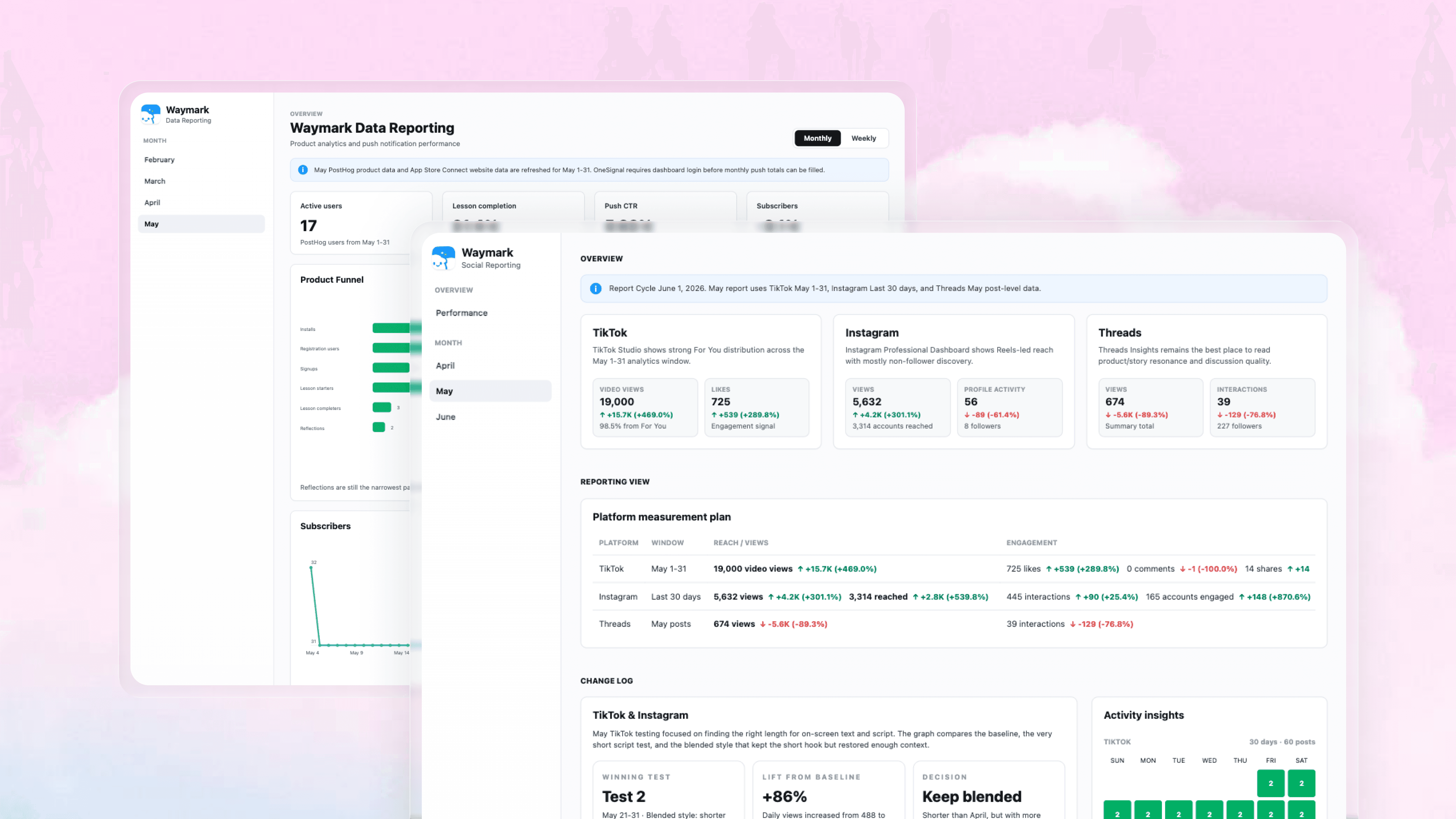
And when you are building on your own, data can get overwhelming very quickly.
You are behind the product, the code, the experience, the content, the marketing, the testing, the support, and the decisions that come after all of it. The information is there, but it lives in too many places. TikTok insights, Instagram insights, Threads posts, profile visits, reach, engagement, website clicks, downloads, product events, push notification data, App Store numbers, and countless other signals.
At some point, I realized I was not lacking data.
I was lacking a clearer way to understand it.
So I started building local dashboards for Waymark. One for social media reporting, and another for product reporting. I used Codex to help me move faster, not as a replacement for thinking, but as a way to structure the data, connect patterns, and turn scattered signals into something I could actually use.
The goal was not to make a fancy dashboard.
The goal was to make better decisions.
For the social media dashboard, I wanted to understand how Waymark was growing outside the product. Which platforms were creating awareness. Which content formats were resonating. Which posts led to profile visits. Which channels were building trust. Which ones were simply getting views without helping people understand what Waymark actually is.
For the product dashboard, I wanted to understand what was happening inside Waymark. Where people started. Where they continued. Where they stopped. Which parts of the experience created movement, and which parts needed more clarity.
That shift changed how I looked at both product design and marketing.
In the beginning, I honestly did not think Waymark needed TikTok or Instagram (and I dreaded this).
I was already sharing the journey on Threads and occasionally on my personal Instagram. My assumption was that if the product solved a real problem, people would eventually find it. Marketing felt secondary compared to building.
I was wrong.
After launching Waymark, I quickly realized that building something useful does not automatically mean people will discover it. If nobody knows the product exists, it does not matter how thoughtful the experience is.
So in April, I created dedicated TikTok and Instagram accounts for Waymark and started posting consistently.
That decision ended up becoming one of the most important experiments of the past few months.
Before that, my decisions were mostly guided by the pain point. I knew the emotional problem I wanted to solve. I knew the kind of person I was designing for. I knew the experience I wanted Waymark to feel like.
But after two months of posting consistently and reviewing product behavior, the question became more specific.
It was no longer only, “Does this solve a real problem?”
It became, “Where is the evidence that this is working, and where is the experience still unclear?”
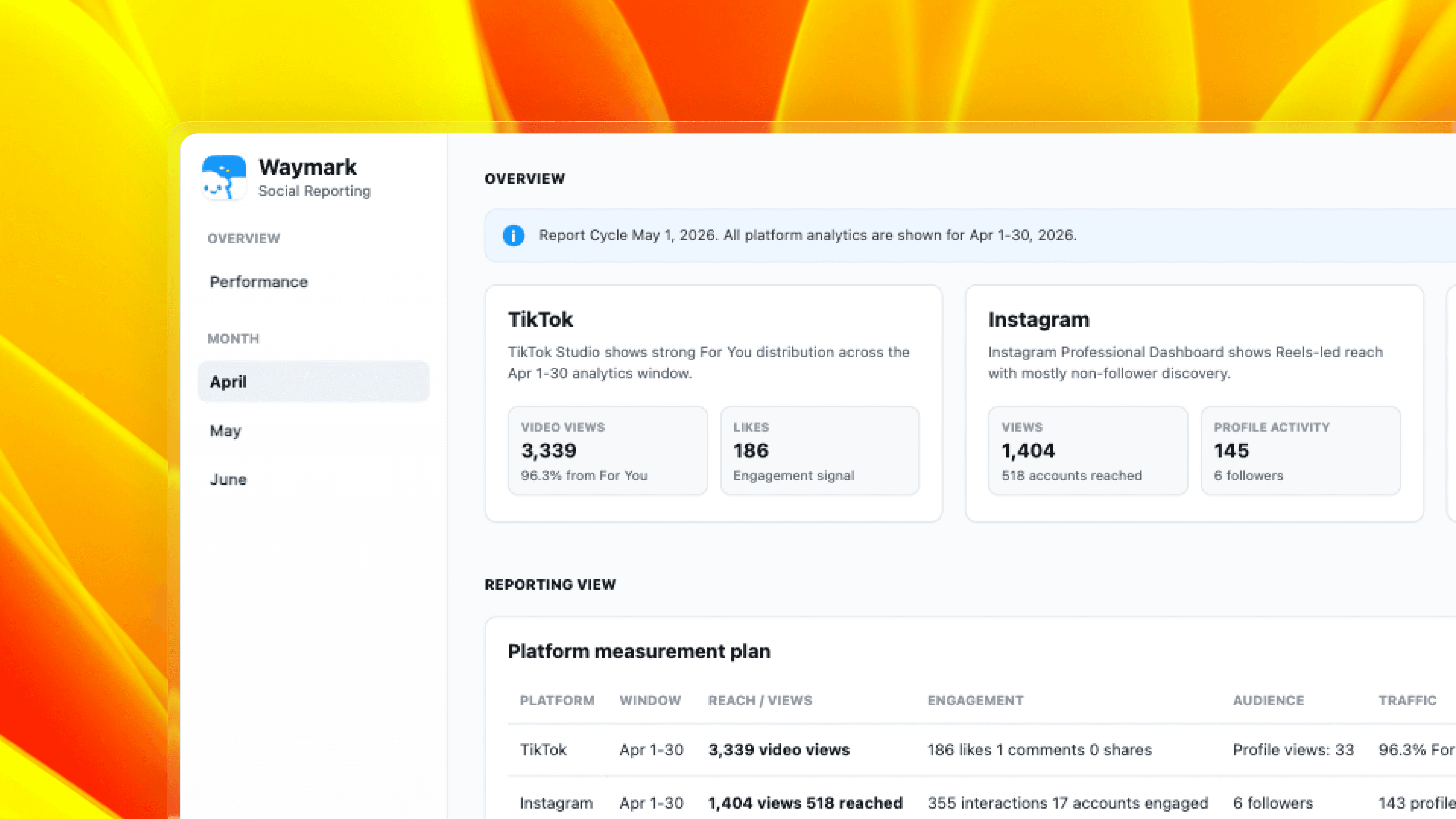
April was the first real signal month for Waymark’s social media.
Because the TikTok and Instagram accounts were brand new, I did not have any expectations. I was simply trying to learn. I posted content, watched the numbers, and tried to understand what people responded to.
The results felt stagnant at first.

I had little to no views, I did not know what they meant. I had small engagement, but I did not know what to repeat. I had content going out across TikTok, and Instagram but no single view of what was actually happening.
The April dashboard gave me something I did not have before: context.
Instead of looking at individual metrics in isolation, I could start identifying patterns and forming hypotheses about what might need to change. It helped me understand what was working, what was underperforming, and what experiments were worth trying in May.
May was different.
Because of what I learned from the April dashboard, I had a clearer idea of what needed to be tested and adjusted. With the dashboard, I could also compare April and May more clearly.
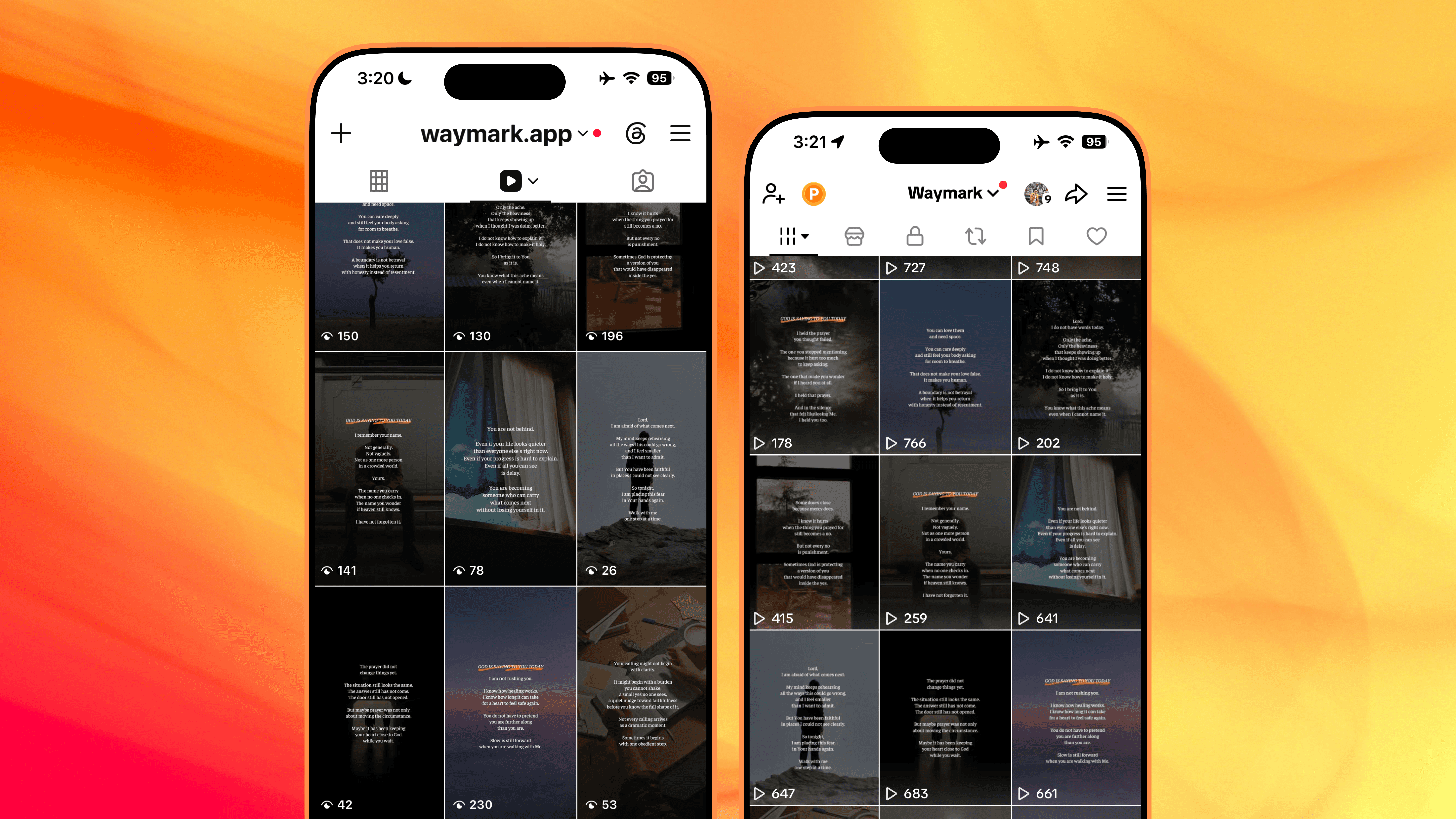


TikTok and Instagram revealed a similar pattern.
The strongest posts were not broad Bible verse content. They were emotion-first, identity-specific faith content. Posts about feeling spiritually tired, taking too long to heal, praying before the unknown, or trying to return to faith slowly.
That told me something important about Waymark’s positioning.
People were not only responding to Scripture content.
They were responding to the emotional doorway into Scripture.
Across both platforms, the goal was primarily awareness and audience building. I intentionally kept Waymark in the background, designing content to connect with people first and introduce the product second.
The results reflected that strategy. Reach improved, and people resonated with the content, but that did not always translate into profile visits or deeper product curiosity. People could engage with a Reel or video and leave without fully understanding what Waymark is or why it exists.
At this stage, I did not view that as a failure. Both platforms were still serving their primary purpose: helping people discover the content, connect with the message, and begin building familiarity with the Waymark brand.

Threads gave me another signal.
Total views dropped because I posted less, but the interaction rate was stronger. The posts that worked best were not necessarily faith content. They were reflections on building the product itself, using tools like PostHog and OneSignal, experimenting with AI, and sharing lessons from the journey.
What made Threads especially interesting was that it has been my strongest conversion channel so far.
Unlike TikTok and Instagram, I had been posting there long before I started actively marketing Waymark. I shared the journey while I was still building the app, talked openly about product decisions, and documented what I was learning along the way.
Over time, that build-in-public approach created trust and familiarity with the product before it even launched.
That helped clarify the role of each platform.
TikTok and Instagram help people discover the emotional problem and engage with faith-focused content, gradually building understanding of the idea.
Threads helps people trust the person building it.
Once I saw that, content stopped feeling like one big messy task.
It became a system.
The product data gave me a different kind of lesson.
April showed the first real usage baseline, but there is an important reason for that. Waymark first launched on January 28, yet I did not implement PostHog event tracking until April 2. I also implemented OneSignal push notifications on April 5, which gave me my first reliable way to measure notification delivery, opens, and engagement. That meant I spent the first two months building and shipping features without having a reliable way to understand how people were actually using them or how they were responding to reminders to return to the app.
Looking back, that was a valuable lesson in itself.
As a solo builder, it is easy to focus almost entirely on the product. You want to improve the experience, add features, fix bugs, and keep moving forward. But analytics is not something you add later when you have time. Event tracking and engagement measurement are part of the product. If you do not measure key actions, you lose the ability to understand whether your assumptions are correct or whether your changes are helping people.
Because tracking only started in April, that month became the first real usage baseline for Waymark. May, however, was not a clean performance month. It was a product transition month.
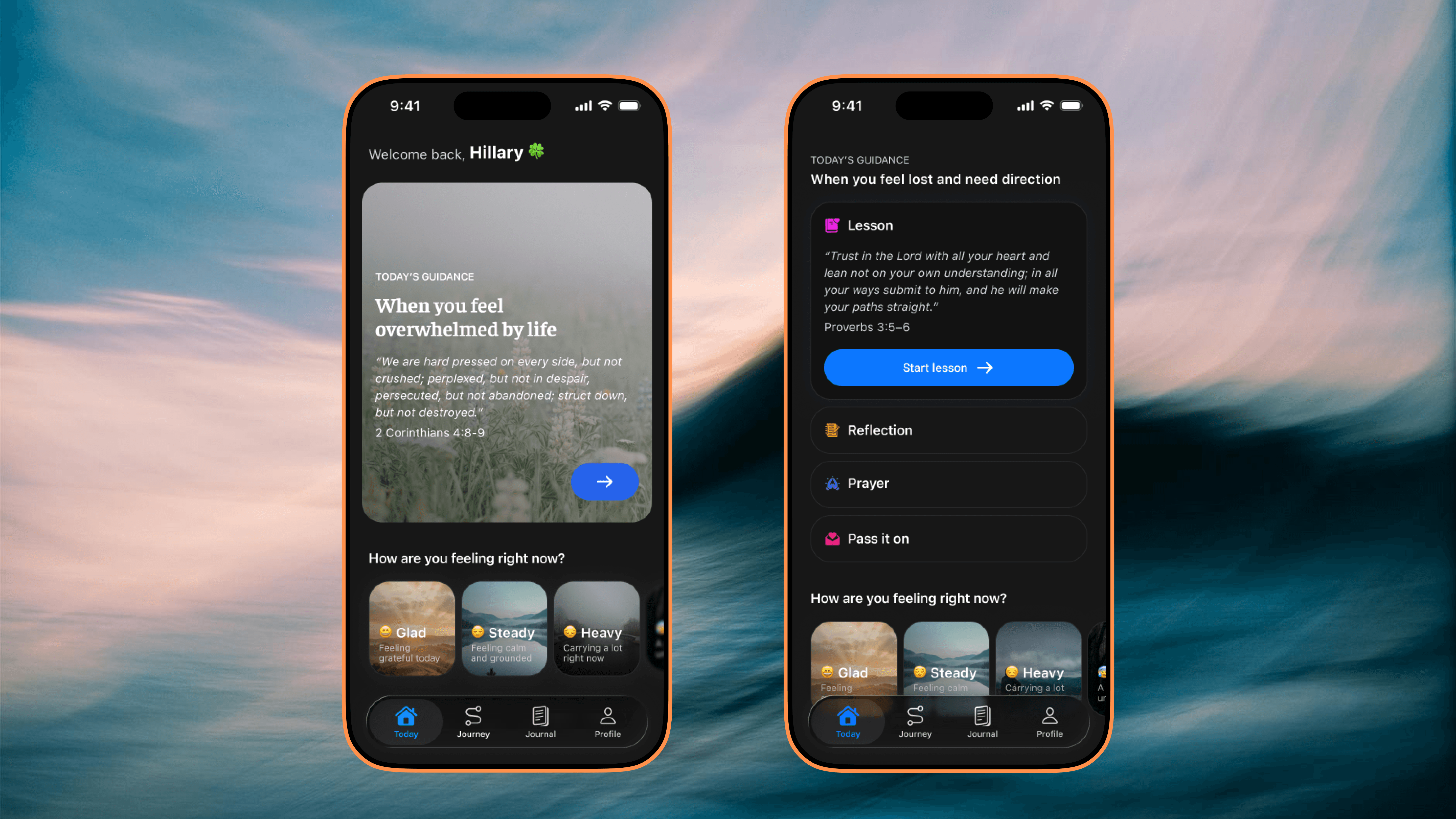
On May 5, I released a new guided lesson experience. The old Today lesson card was emotionally strong, but it still felt too much like a single content card. Reflection and prayer were not clearly framed as part of a complete journey.
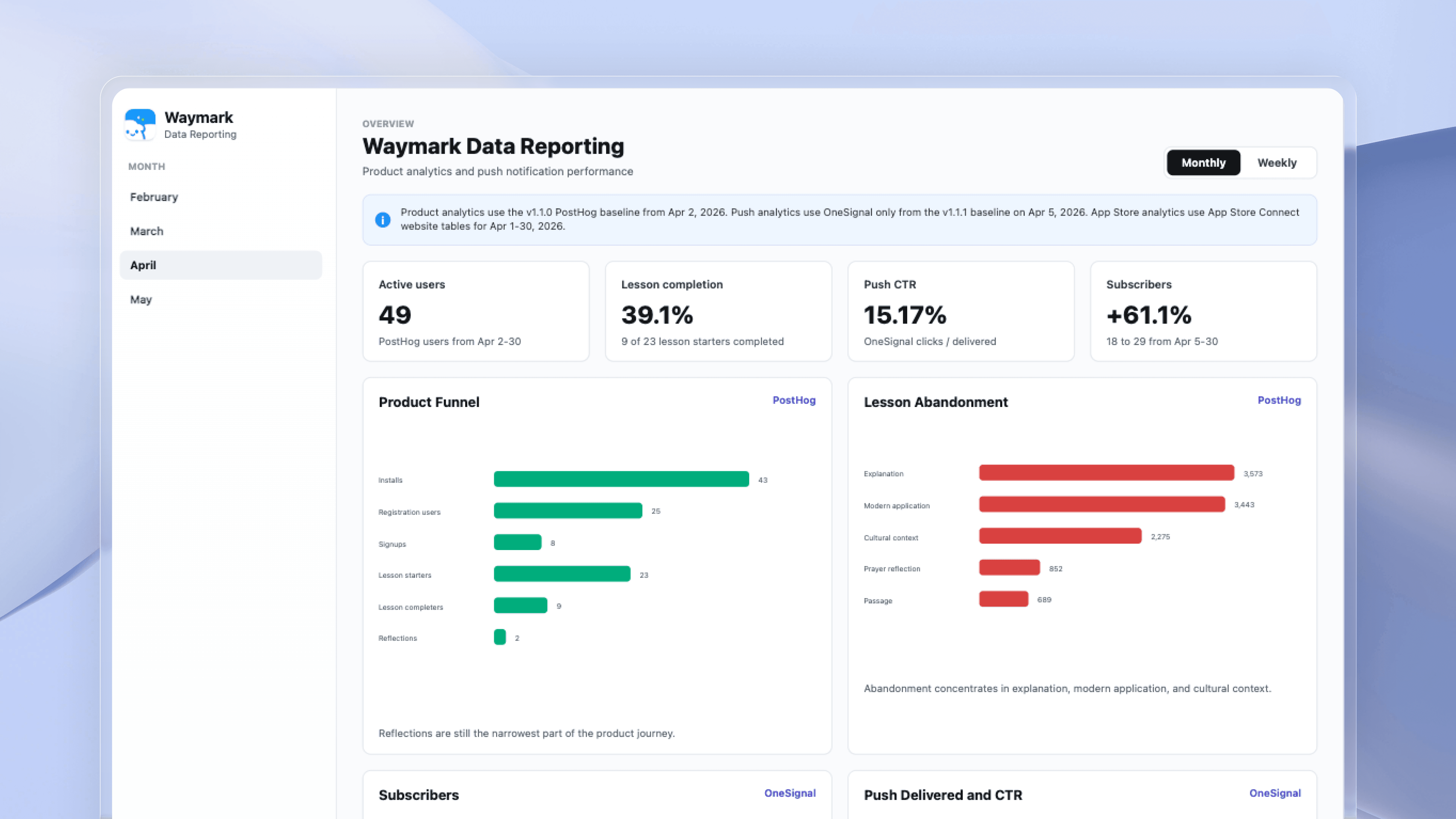
The decision was heavily influenced by what I saw in April's completion data. Of the 23 people who started a lesson, only 9 completed it. That meant 14 people dropped off before reaching the end, a drop-off rate of approximately 61%. In other words, fewer than 4 in 10 people who started a lesson actually completed it.
That was a strong signal that the experience needed more guidance and clearer progression.
The new structure made the spiritual flow more explicit:
Lesson. Reflection. Prayer. Pass it on.
That change was not random. It came from noticing that the product needed to make the next step clearer. If Waymark is meant to help people understand Scripture and apply it to life, the experience cannot only stop at reading. It needs to guide people toward reflection, prayer, and eventually sharing the lesson with someone who might need it too.
But the data also taught me something important about measurement.
When the guided lesson flow changed, the event tracking did not fully follow the new experience. There was also a push notification bug after the May 5 release. That meant May’s product data could not be treated as a clean verdict on whether the redesign worked.
On paper, some numbers looked worse.
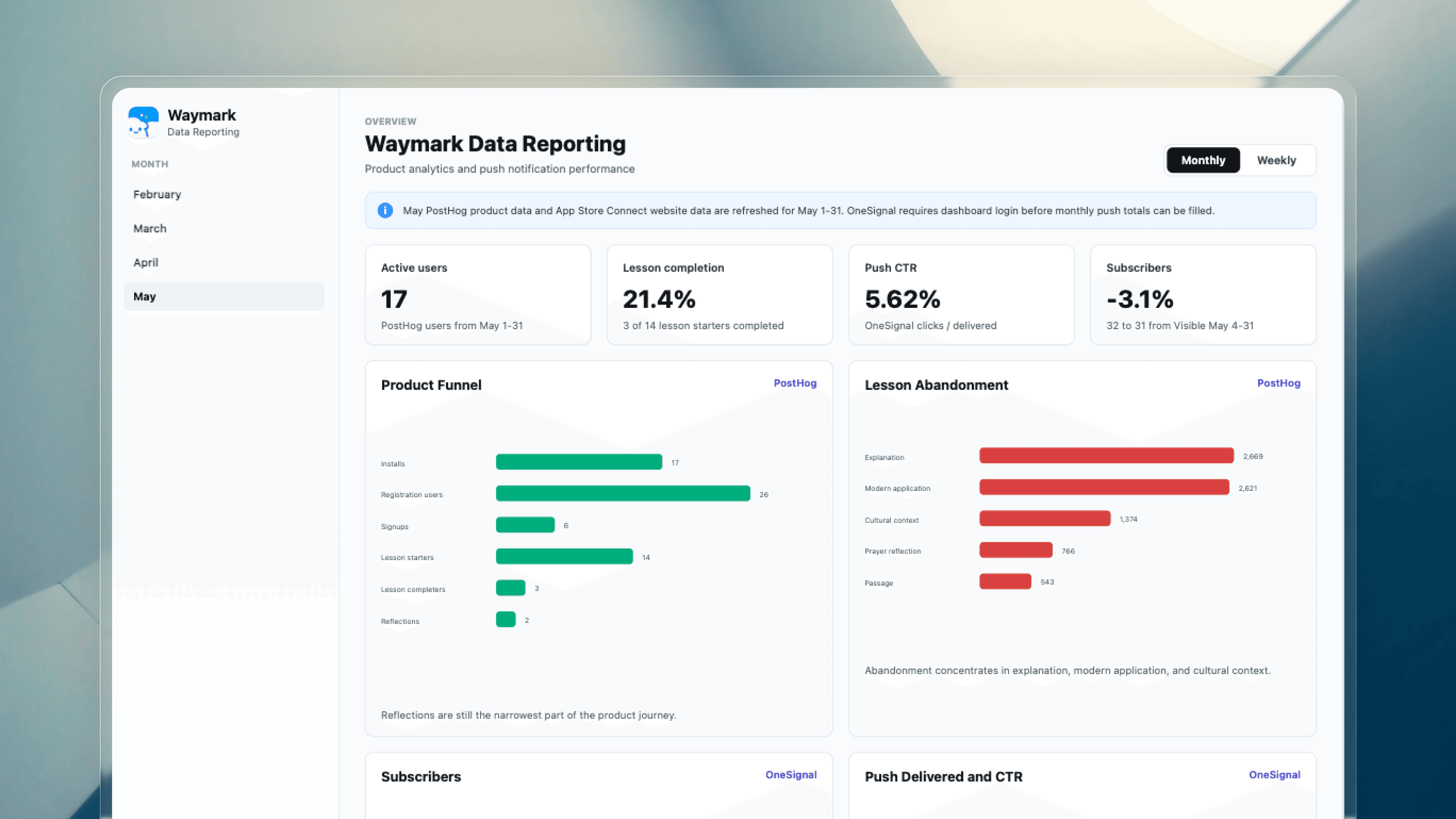
Active users dropped from 49 in April to 17 in May. Tracked installs dropped from 43 to 17. Lesson starters dropped from 23 to 14. Lesson completers dropped from 9 to 3. Push CTR dropped from 15.17% to 5.62%. I also knew that one of the biggest contributing factors was posting less on Threads during May. Threads has consistently been Waymark’s highest-converting social channel, so reducing activity there likely had a direct impact on installs and overall product activity, making it even harder to isolate the effect of the guided lesson changes alone.
If I only looked at those numbers quickly, it would be easy to panic.
But the dashboard helped me read the data more responsibly.
The right conclusion was not, “The guided lesson failed.”
The better conclusion was, “The guided lesson was the right product response to April’s drop-off, but May cannot accurately validate whether it improved completion because the tracking layer did not fully match the new journey.”
That distinction matters.
Data is useful, but only when the data itself is understood correctly.
If the product changes but the tracking does not, the numbers can still tell a story, but it may not be the full story. That was an important lesson for me as a solo builder. I could not only ship the product improvement. I also had to make sure the measurement system evolved with it.
The App Store numbers gave another clean signal.
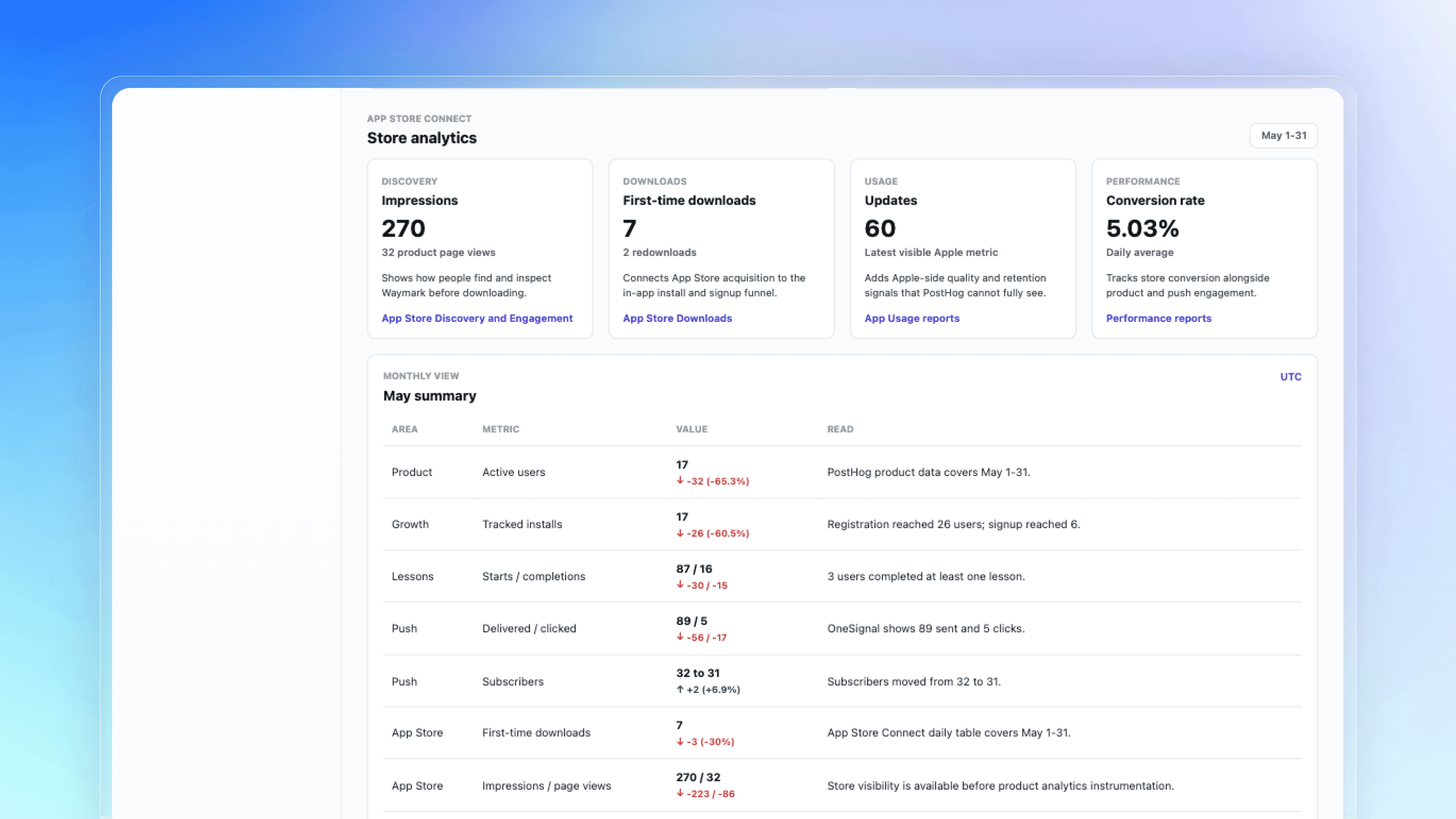
In May, social media reach grew strongly, especially on TikTok and Instagram. But App Store acquisition still weakened. Impressions dropped from 493 to 270. Product page views dropped from 118 to 32. First-time downloads dropped from 10 to 7. App Store conversion rate dropped from 18.2% to 5.03%.
At first glance, it looked like a disconnect between social growth and product growth.
But after reflecting on my strategy, I realized this outcome was not entirely surprising.
TikTok and Instagram were never optimized for installs in May. They were optimized for awareness. Most of the content was designed to build reach, engagement, and audience familiarity rather than drive immediate downloads.
That made the gap much clearer.
Waymark was getting more attention on social media, but I had not yet fully focused on converting that attention into app discovery or downloads.
So the challenge was not only a product challenge.
It was a bridge problem.
Social post to profile curiosity.
Profile curiosity to App Store visit.
App Store visit to download.
Download to meaningful use.
Meaningful use to return.
Once I saw it that way, I stopped seeing product and marketing as separate tracks. They are connected parts of the same user journey. If people resonate with a post but do not understand what Waymark is, that is a messaging problem. If they visit the App Store but do not download, that is a positioning or trust problem. If they download but do not complete the lesson, that is a product clarity problem. If they complete a lesson but do not reflect, that is an activation problem.
The dashboard did not magically solve those problems.
But it helped me see them more clearly.
Another realization came from looking at how I had spent my time over the past two months.
Because social media was completely new territory for me, I spent a significant amount of time learning how TikTok, and Instagram worked. I was experimenting with content formats, studying analytics, and trying to understand how awareness translated into product interest.
That focus was necessary because I needed to learn how distribution worked.
But now that I have a much better sense of each platform and the role they play, I also realize that I need to rebalance my attention.
Marketing and product growth cannot compete with each other for time. They need to support each other.
The past two months were heavily weighted toward learning marketing. Going forward, I want to be more intentional about balancing both sides of the equation: continuing to grow awareness while also investing in product improvements, onboarding, retention, and the overall user experience.
For Threads, the direction is simple: post more consistently. The platform has shown the strongest conversion potential so far, and I want to continue leaning into the build-in-public approach that has resonated with people. That means sharing more lessons from building Waymark, more reflections on product decisions, and more of the journey behind the app.
For TikTok and Instagram, the focus remains awareness and experimentation.
Right now, I am still in the account-building phase. Reach and engagement are the primary goals. I want to continue learning what content resonates, what attracts followers, and what helps establish a stronger presence on both platforms.
Because of that, Waymark will likely continue to appear more subtly in the content rather than becoming the central focus of every post.
Once the accounts are more mature and have built a larger audience, I can shift more attention toward conversion. At that point, the challenge will be understanding how to turn awareness into meaningful interest and eventually installs through clearer messaging, stronger calls to action, and more intentional product-focused content.
For the product, the priority is measurement accuracy.
I need to rebuild the analytics around the new guided lesson experience. Not just tracking whether someone started or completed a lesson, but understanding each step in the journey. Did they view the lesson card? Did they start the lesson? Which step did they reach? Did they open reflection? Did they save a reflection? Did they continue to prayer? Did they pass it on?
The most important June product question is not only, “How many people started a lesson?”
It is, “Of the people who start a guided lesson, how many reach each step?”
That is the kind of question that can help me design better.
The biggest lesson so far is that data did not replace the original pain point.
It gave it direction.
A pain point can help you start with empathy, but data helps you continue with responsibility. It keeps your decisions from becoming purely assumption-driven. It shows where awareness is growing, where interest is fading, where the product journey is unclear, and where your communication needs to become sharper.
I'll be honest, when I look at some of the numbers, especially on the product side, it's easy to feel demotivated. I've felt that myself. As builders, we naturally want to see growth, validation, and signs that our work is paying off. When those signals are slow to appear, it can be tempting to question whether you're moving in the right direction.
What has helped me is realizing that the dashboard is not just a scorecard. It's a compass.
The numbers may not always tell me what I want to hear, but they give me a clearer direction for what to improve next. Instead of making decisions blindly, I can identify where the gaps are, form better hypotheses, and focus my energy on the areas that matter most.
Building something meaningful is tough. Progress is rarely linear, and there are no instant results without consistent effort behind them. The work of learning, testing, iterating, and improving often takes longer than we expect.
So if you're building something of your own and feeling discouraged by the numbers, you're not alone. Keep learning. Keep iterating. Keep paying attention to the signals. Results take time, but every experiment, every lesson, and every adjustment moves you one step closer to understanding what works.